Build Your Email List & Get Your First 1,000 Subscribers: The best for Beginner Guide in 2026

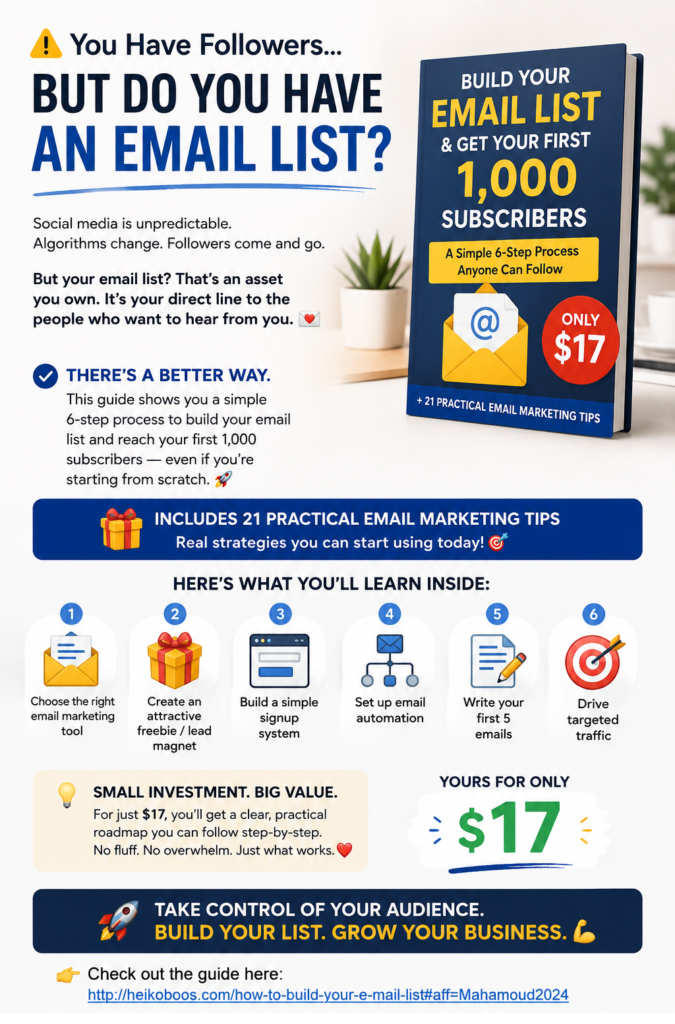
You can have followers, likes, views, and subscribers on social platforms and still have limited control over how many people see your next post. Algorithms change, reach fluctuates, and platforms can change their rules at any time.
That is why learning how to build your email list is an important step for beginners, affiliate marketers, bloggers, creators, coaches, freelancers, and online entrepreneurs. An email list gives you a direct, permission-based way to stay in touch with people who have chosen to hear from you.
Table of Contents
Why an Email List Is a Valuable Business Asset
Social media is useful for discovery and conversation, but an email list can give you a more direct relationship with your audience. You can send useful information, introduce relevant offers, share new content, and invite subscribers back to your website without depending entirely on an algorithm.
A healthy email list is more than a collection of addresses. It is an audience you can serve consistently. The key is to earn permission, provide value, respect subscriber preferences, and make your messages relevant.
A Simple 6-Step Process to Build Your Email List
The guide Build Your Email List & Get Your First 1,000 Subscribers focuses on a practical six-step process. It is designed as a starting framework that beginners can understand, implement, test, and improve rather than a promise of overnight results.
- Choose the right email marketing tool.
- Create an attractive freebie or lead magnet.
- Build a simple signup system.
- Set up email automation.
- Write your first five emails.
- Drive targeted traffic.
1. Choose the Right Email Marketing Tool
Your email marketing tool is where you collect subscribers, organize contacts, create campaigns, and set up automation. Compare ease of use, signup forms, automation, deliverability features, subscriber limits, and pricing. A platform you can confidently use is often more valuable than a complicated tool you never fully configure.
2. Create an Attractive Freebie or Lead Magnet
A lead magnet is a useful free resource offered in exchange for an email address. It could be a checklist, short guide, template, worksheet, resource list, or practical tutorial. Strong lead magnets solve one specific problem for one specific audience. Keep the promise clear and make the resource genuinely useful.
3. Build a Simple Signup System
Your signup page or form should quickly answer three questions: What will I get? Is it relevant to me? What do I need to do next? Keep the page focused, explain the benefit clearly, and avoid asking for unnecessary information. A simple path from visitor to subscriber is easier to measure and improve.
4. Set Up Email Automation
Automation helps you deliver a consistent welcome experience when someone joins your list. A beginner sequence can introduce you, deliver the promised freebie, provide a useful tip, explain what subscribers can expect, and point readers toward relevant content. Keep promotional messages relevant and useful.
5. Write Your First Five Emails
A simple first five-email plan can remove the fear of staring at a blank screen: welcome the subscriber, deliver the promised resource, teach one useful idea, share a practical example or lesson, and introduce a relevant next step. The goal is to build familiarity and trust while giving readers a reason to keep opening your emails.
6. Drive Targeted Traffic
A signup system only works when the right people find it. Depending on your niche, you can use helpful content, social media, communities where promotion is allowed, partnerships, search traffic, or other audience-building channels. Focus on attracting people who genuinely need the problem your lead magnet solves instead of chasing random traffic numbers.
21 Practical Email Marketing Tips for Beginners
The guide also includes 21 practical email marketing tips. The core lessons are straightforward: give people a clear reason to subscribe, deliver what you promised, write useful subject lines, keep emails readable, test calls to action, segment when useful, respect subscriber preferences, and improve your system based on what you learn.
Your first signup page, welcome sequence, or subject line does not need to be perfect. Start with a clear version, measure what happens, and improve it over time.
Who This Email List Guide Is For
This resource is designed for people who want a practical introduction to email list building. It can be especially useful for affiliate marketers, bloggers, creators, coaches, freelancers, and online entrepreneurs who have an audience but do not yet have a dependable email marketing system.
Is the $17 Email Marketing Guide Worth Considering?
The guide is priced at $17. That makes it a relatively affordable starting resource for someone who wants a structured introduction to email list building rather than piecing everything together from scattered articles and videos. Results depend on your audience, offer, implementation, consistency, and other factors. There are no guaranteed income claims.
What to Do After You Read the Guide
Use the six-step framework as a practical checklist: choose an email tool, create a useful lead magnet, publish a signup form or page, connect your welcome automation, draft your first five emails, and start bringing targeted visitors to your signup system. Then review the data and improve one part at a time.
Ready to Build Your Email List?
If you want a practical starting point for building your email list and working toward your first 1,000 subscribers, take a look at the guide and decide whether its approach fits your goals.
Affiliate disclosure: This article contains an affiliate link. If you purchase through the link, I may earn a commission at no additional cost to you. Please review the product details and terms on the seller’s page before purchasing.