

Introduction to CorelDRAW
CorelDRAW is a powerful graphic design software widely used by professionals and hobbyists alike for creating vector illustrations, layouts, photo edits, and typography. Known for its versatility, CorelDRAW caters to a broad audience, from beginners to seasoned designers, by offering user-friendly tools alongside advanced customization options. CorelDRAW has been a staple in the design world since its inception and continues to evolve with new features that support creative projects in various fields such as branding, web design, and print media.
One of CorelDRAW’s standout qualities is its ability to produce high-quality vector graphics, which can be scaled infinitely without losing resolution. This feature is particularly beneficial for logo design, detailed illustrations, and other print media where sharpness and clarity are critical. CorelDRAW’s comprehensive toolset supports everything from simple shape creation to intricate vector art, making it an excellent choice for both minimalist and detailed design projects.
The software’s intuitive interface allows users to navigate tools with ease, while also offering customization options that enable designers to create a workspace tailored to their specific needs. In recent versions, CorelDRAW has introduced features that enhance the user experience, including advanced drawing tools, AI-based enhancements, and improved performance for handling larger files. These features contribute to a smoother design process and make CorelDRAW an efficient solution for complex projects.

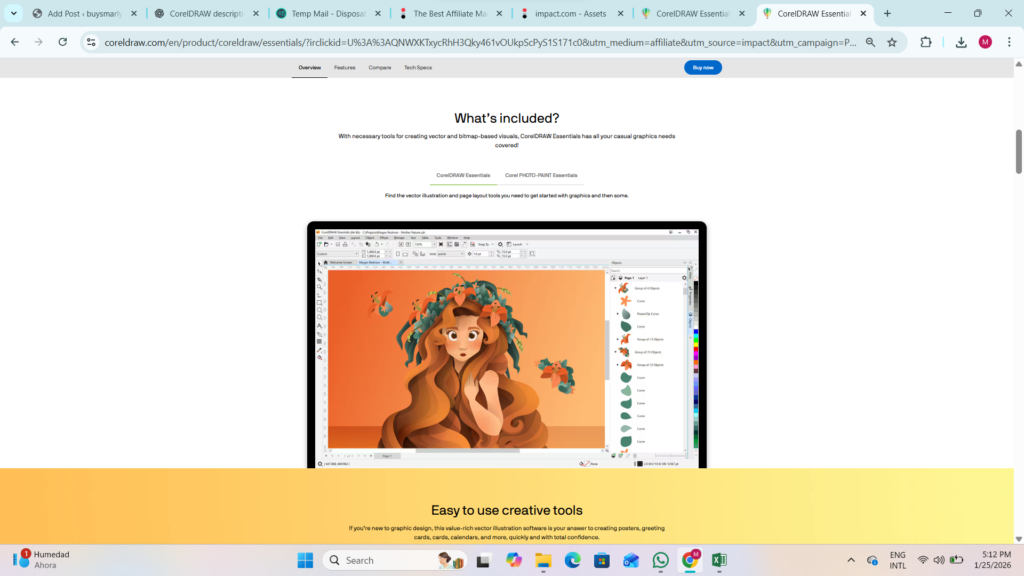
CorelDRAW Interface Screenshot: Showcasing the main workspace of CorelDRAW would help readers visualize the layout, toolbar arrangement, and how user-friendly the interface is for both beginners and professionals.
User Interface and Ease of Use
CorelDRAW is praised for its intuitive and user-friendly interface, which is designed to make navigating design tools simple and efficient for users of all experience levels. Upon opening CorelDRAW, users are greeted with a clean workspace that allows easy access to essential tools, including a customizable toolbar, layers, and color palettes. This organized layout helps users focus on their creative process without the clutter often found in other design software.
One of the strengths of CorelDRAW’s interface is its flexibility. The software offers customizable workspaces, enabling users to rearrange toolbars, dockers, and menus according to their preferences. This adaptability is ideal for professionals who have specific workflows and beginners who may want to start with a simplified setup. CorelDRAW even provides pre-built workspaces tailored for different design needs, such as illustration or layout, allowing users to jump right in and start working with ease.
Another key feature enhancing ease of use in CorelDRAW is its tooltips and built-in tutorials. Tooltips provide quick explanations as users hover over different tools, making it easier for beginners to understand each function without needing to consult a manual. Additionally, CorelDRAW includes interactive tutorials and tips directly in the software, so new users can learn as they work. This helps streamline the learning curve, enabling users to become proficient in CorelDRAW faster than with many other design programs.
Compatibility and File Support
CorelDRAW offers extensive compatibility and file support, making it a versatile tool for designers working across various platforms and collaborating with users of different software. CorelDRAW supports a broad range of file formats, which means users can easily import and export files without losing quality or compromising compatibility. This flexibility is particularly useful for designers who need to work with clients or team members using other design programs.
CorelDRAW is compatible with industry-standard formats such as AI, PSD, PDF, EPS, SVG, DWG, and DXF, allowing seamless transitions between CorelDRAW and other popular software, including Adobe Illustrator, Photoshop, and AutoCAD. For designers working on both print and digital projects, CorelDRAW also supports bitmap and vector files like JPG, PNG, GIF, and TIFF, ensuring they can create and share designs in the right format for any application.
Another notable feature is CorelDRAW’s native CDR file format, which preserves all elements of a design, including layers, effects, and fonts, without data loss. This format is ideal for long-term project storage, as it keeps designs intact and allows users to revisit and edit files easily. CorelDRAW also allows users to export files with optimized settings for specific uses, such as web graphics, print, or custom settings, ensuring that files meet the quality requirements of the intended medium.
Design and Editing Features
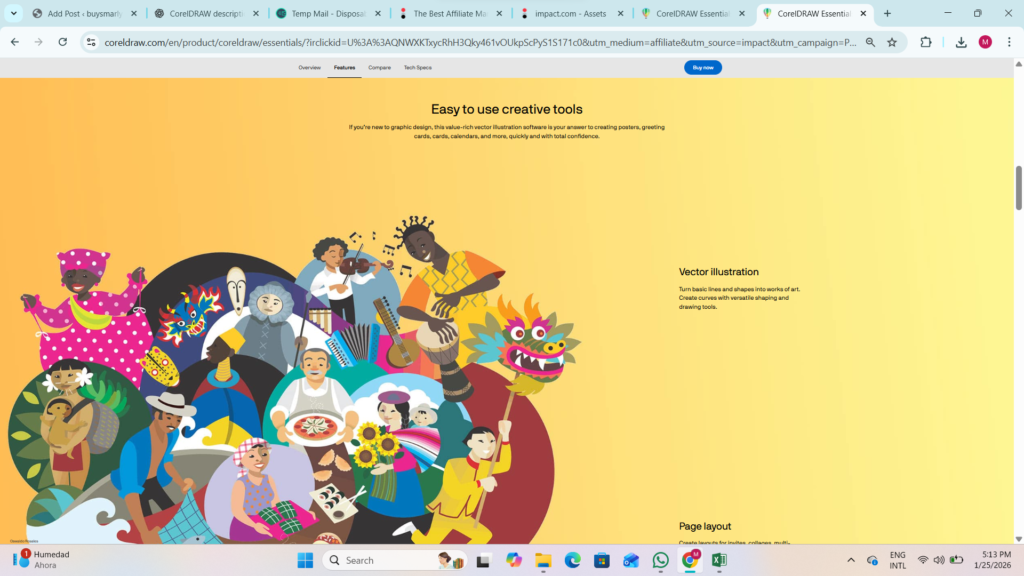
CorelDRAW is known for its comprehensive set of design and editing features, making it a popular choice among graphic designers and artists looking for versatility and creative freedom. With powerful tools for vector illustration, photo editing, and layout design, CorelDRAW provides everything needed to create professional-grade artwork and graphics from scratch or modify existing designs.
One of CorelDRAW’s core strengths is its vector editing capabilities, which allow users to create scalable designs without losing quality. With tools like the Pen Tool, Shape Tool, and Smart Fill Tool, designers can craft intricate shapes, smooth curves, and complex illustrations that maintain crisp edges at any resolution. These features are especially valuable for projects requiring resizing, such as logo creation or product packaging.
In addition to vector tools, CorelDRAW also offers advanced photo editing capabilities through Corel PHOTO-PAINT. Users can adjust colors, apply effects, retouch images, and remove backgrounds directly within the CorelDRAW suite, which integrates seamlessly with design workflows. This means users don’t have to switch between programs, making it more efficient to combine raster and vector elements within a single project.
For layout and typography, CorelDRAW includes intuitive tools that make creating eye-catching page designs easy. Designers can use the Multi-Page View to work on multiple pages within one document, ideal for projects like brochures or presentations. CorelDRAW’s typography tools offer flexibility with font styling, text wrapping, and special effects, allowing for creative and professional text treatments. Additionally, CorelDRAW supports OpenType, TrueType, and Type 1 fonts, making it easy to achieve a distinctive look with a wide range of font styles.
Precision and Accuracy
CorelDRAW is highly regarded for its precision and accuracy, making it a top choice for designers who need to ensure exact measurements and alignment in their work. CorelDRAW includes a range of tools specifically designed to enhance precision, from guidelines and grids to snapping features, enabling designers to create professional-grade designs with complete control over every element.
One of the most notable features is CorelDRAW’s snapping functionality, which allows objects to snap to guidelines, grid lines, or other objects as they are moved or adjusted. This ensures that every element is perfectly aligned, which is particularly helpful in projects like layout design, where consistency and alignment are essential. CorelDRAW also offers customizable guidelines and rulers that can be set to specific measurements, giving designers added control over the placement and spacing of each component in their project.
For projects that require exact scaling and positioning, CorelDRAW provides advanced measurement tools, including a precise dimensioning tool, which displays real-time dimensions and distances between objects. This is especially valuable for technical drawings, architectural designs, or any project where exact specifications are crucial. Additionally, CorelDRAW’s pixel-perfect tool allows designers to align objects precisely to the pixel grid, ensuring that web graphics and digital designs appear sharp and clear on screens.
CorelDRAW further supports accuracy with its advanced alignment and distribution tools. These allow designers to align and space multiple objects evenly with just a few clicks, making it easy to create symmetrical layouts and balanced compositions without manually adjusting each element. This level of precision not only saves time but also enhances the quality of the final design.

Customizability and Workflows
CorelDRAW stands out for its high level of customizability, allowing designers to create a workspace and workflow that suits their individual needs. This flexibility is particularly valuable for professional designers who require specific tools and features to be readily accessible and for new users who benefit from a simplified setup. With CorelDRAW, users can customize everything from toolbars and shortcuts to interface colors, helping them streamline their creative process.
One of CorelDRAW’s key customizability features is the ability to create custom workspaces. Users can rearrange toolbars, dockers, and panels to position frequently used tools in an optimal layout. Additionally, CorelDRAW provides preset workspaces tailored for various design disciplines, like illustration, layout, or web design, making it easy for users to get started with a configuration suited to their specific project needs.
CorelDRAW also offers customizable keyboard shortcuts, which help improve workflow speed and efficiency. Designers can assign shortcuts to commonly used functions, allowing them to perform tasks quickly without having to navigate menus. This is particularly useful for professionals who rely on repetitive actions in their workflow, as customized shortcuts can significantly cut down on time spent performing routine tasks.
Another feature that enhances workflow in CorelDRAW is the ability to create and save reusable assets. For example, users can save color palettes, templates, and custom styles to apply to future projects. These saved assets reduce the need to recreate elements from scratch and help maintain consistency across multiple projects. Additionally, CorelDRAW’s integration with Corel Cloud allows users to save their customizations and access their personalized workspaces from different devices, supporting seamless workflow continuity.
Color Management
CorelDRAW provides a robust set of color management tools, ensuring that colors remain consistent and accurate across various devices, mediums, and print processes. This feature is crucial for designers working on projects that require precise color representation, such as branding materials, packaging, and print designs. CorelDRAW’s color management capabilities allow users to achieve reliable color reproduction, whether for digital displays or printed outputs.
One of the primary features of CorelDRAW’s color management system is its support for color profiles. Users can set up RGB, CMYK, or grayscale color profiles based on the requirements of their project, ensuring accurate color display and printing. By allowing users to choose industry-standard color profiles, CorelDRAW minimizes color shifts that can occur when moving designs between different screens or printers. This is especially valuable for professionals who work with various printing processes or need to meet specific color standards.
CorelDRAW also includes a powerful color palette management system, providing access to a range of built-in color libraries, including Pantone, HKS, and more. Designers can use these libraries to select spot colors that maintain their vibrancy and consistency when printed. Additionally, CorelDRAW lets users create custom color palettes and save them for future projects, which is particularly helpful for branding work, where consistent color usage is key.
For digital projects, CorelDRAW offers a soft proofing feature, which allows users to preview how colors will appear on different screens and devices. This tool is invaluable for web and digital designers who need to ensure their designs look great across various display types. Soft proofing simulates color appearance on different devices, helping users identify and address any potential color discrepancies before finalizing their work.
Typography and Text Handling
CorelDRAW excels in typography and text handling, providing designers with a comprehensive set of tools to create, manipulate, and style text in their designs. With its powerful features, CorelDRAW allows users to achieve professional-quality typography, making it ideal for a wide range of projects, from promotional materials to complex layouts.
One of the standout features of CorelDRAW is its ability to work with multiple text formats, including OpenType, TrueType, and Type 1 fonts. This flexibility ensures that designers can use a wide variety of typefaces, enhancing their creative options. Additionally, CorelDRAW provides access to numerous font libraries, allowing users to explore and choose fonts that best fit their design aesthetics.
CorelDRAW also includes advanced text formatting options, enabling users to adjust spacing, alignment, and line height to achieve the desired look. The software supports both paragraph and character formatting, allowing for detailed adjustments that contribute to better readability and overall design flow. Furthermore, designers can apply various text effects, such as outlines, shadows, and gradients, which add depth and visual interest to text elements.
For more complex projects, CorelDRAW features tools for creating text on a path, enabling users to wrap text around shapes or along curves. This functionality is particularly useful for creating dynamic logos, labels, and other graphics where text needs to follow a specific shape. Additionally, users can convert text to curves, allowing for further manipulation of individual letters and the creation of custom typographic designs.
CorelDRAW also simplifies the management of text styles through the use of stylesheets. Designers can create and save text styles to maintain consistency across multiple projects, ensuring that brand guidelines are followed and making it easy to apply uniform formatting to similar text elements.
Illustration and Drawing Tools
CorelDRAW is renowned for its powerful illustration and drawing tools, making it a favorite among graphic designers, illustrators, and artists. The software offers a comprehensive suite of features that empower users to create intricate and visually stunning illustrations, whether for print, web, or other digital mediums.
At the heart of CorelDRAW’s illustration capabilities is its versatile pen tool, which allows users to create both freehand and precise vector paths. This tool is essential for creating custom shapes, lines, and intricate designs. The Bezier tool enhances this experience by enabling users to manipulate curves and angles with precision, ensuring that their illustrations are both accurate and artistic.
CorelDRAW also features an array of brush tools that simulate traditional drawing techniques. Users can choose from a variety of brush types, including calligraphic, artistic, and texture brushes, which can be customized to achieve different effects. This flexibility allows artists to create unique styles, from detailed illustrations to expressive sketches, all within the digital workspace.
Another standout feature is the object management system, which allows users to easily manage and organize multiple layers and objects in their designs. This is particularly useful when working on complex illustrations, as it enables designers to group, lock, or hide objects as needed, maintaining a clear and organized workspace. Additionally, CorelDRAW supports non-destructive editing, allowing users to make adjustments to objects without permanently altering the original design.
For users who want to enhance their illustrations with textures or patterns, CorelDRAW provides a powerful fill tool. This tool allows designers to apply solid colors, gradients, and textures to their shapes, adding depth and interest to their artwork. Furthermore, the ability to create custom patterns and fills ensures that artists can achieve a unique look tailored to their projects.
Performance and Speed
CorelDRAW is designed with performance and speed in mind, making it an ideal choice for professional designers and illustrators who require efficient workflow and quick rendering times. Whether working on complex vector graphics or detailed illustrations, CorelDRAW delivers a smooth and responsive experience, allowing users to focus on their creativity rather than waiting for software to catch up.
One of the key factors contributing to CorelDRAW’s impressive performance is its optimization for modern hardware. The software takes advantage of multi-core processors, which enhances rendering speeds and allows for smoother interactions with large files. This means that users can work with intricate designs containing numerous layers and effects without experiencing lag or delays.
Additionally, CorelDRAW utilizes GPU acceleration to improve the rendering of complex graphics. This feature harnesses the power of the graphics processing unit (GPU) in users’ computers, resulting in faster display and processing times for tasks such as zooming, panning, and applying effects. The result is a more fluid and enjoyable user experience, especially when dealing with high-resolution images or extensive vector artwork.
CorelDRAW also includes an optimized file handling system, enabling users to open, save, and export files quickly. This efficiency is particularly beneficial for professionals who need to manage multiple projects simultaneously. With faster file operations, users can streamline their workflow and reduce the time spent on administrative tasks, allowing them to devote more energy to the creative aspects of their work.
Another important aspect of performance in CorelDRAW is its ability to manage memory usage effectively. The software is designed to minimize the memory footprint while maintaining high-quality rendering, which is essential for users working on resource-intensive projects. This ensures that even on machines with limited resources, users can enjoy a responsive experience without sacrificing performance.
Software Integration and Compatibility with Other Tools
CorelDRAW is not only a powerful design tool on its own, but it also excels in integrating with various software and tools, enhancing its functionality and enabling a seamless workflow for designers. Compatibility with other applications is essential for professionals who need to incorporate different resources and outputs into their projects, and CorelDRAW offers robust solutions in this area.
One of the standout features of CorelDRAW is its support for a wide range of file formats. Users can import and export files in formats such as Adobe Illustrator (.ai), Photoshop (.psd), PDF, SVG, and many others. This flexibility allows designers to collaborate easily with colleagues who may be using different software or to utilize assets from various sources without losing quality or fidelity. For example, importing Photoshop files directly into CorelDRAW allows users to work with raster graphics alongside vector elements seamlessly.
CorelDRAW also supports various plugins and extensions, which can significantly enhance its capabilities. These add-ons can provide additional tools, effects, and functionalities that cater to specific design needs. For instance, users can integrate specialized tools for print production, web design, or even 3D modeling, allowing them to customize their CorelDRAW experience based on their workflow requirements.
Another important aspect of CorelDRAW’s compatibility is its ability to work alongside other Corel products, such as Corel PHOTO-PAINT and Corel Font Manager. This integration enables users to switch between applications effortlessly, allowing for a more cohesive design process. For example, designers can create detailed illustrations in CorelDRAW and then enhance them with advanced photo editing in Corel PHOTO-PAINT, all while maintaining compatibility and quality across the board.
Moreover, CorelDRAW is designed to function well in a multi-software environment, supporting integration with third-party applications commonly used in the design and production industry. This includes software for color management, project management, and printing. Such compatibility is crucial for design teams that rely on multiple tools to complete projects efficiently and effectively.
Pricing and Licensing Options
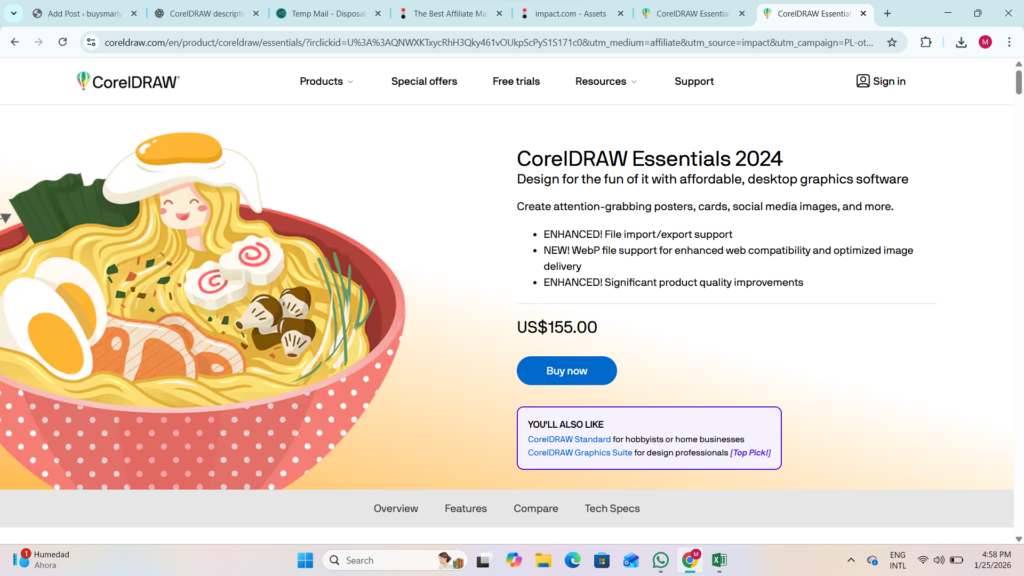
CorelDRAW offers a variety of pricing and licensing options to cater to different user needs, whether for individual designers, businesses, or educational institutions. Understanding these options is essential for making an informed decision about investing in this powerful design software.
One of the primary purchasing options available is the one-time purchase model, which allows users to buy CorelDRAW outright. This option is ideal for those who prefer to own the software permanently without the obligation of recurring payments. Users can benefit from all the essential features and tools without any time limits. However, this model may require users to purchase upgrades periodically to access the latest features and improvements.
In addition to the one-time purchase, CorelDRAW offers a subscription-based model. This flexible option allows users to pay a monthly or annual fee for access to the software. The subscription model is particularly beneficial for users who prefer to have access to the latest updates, features, and enhancements without the need for a large upfront investment. Subscribers receive regular updates automatically, ensuring they are always using the most current version of CorelDRAW.
Corel also provides special licensing options for businesses and educational institutions. Businesses can opt for volume licensing, which allows organizations to purchase multiple licenses at a discounted rate. This is particularly advantageous for teams or departments that need multiple installations of the software. Similarly, educational institutions can take advantage of discounted pricing for students and faculty, making it easier for them to access professional-grade design tools at an affordable price.
For users who are unsure about committing to a purchase, CorelDRAW also offers a free trial period. This allows potential users to explore the software’s features and capabilities before making a financial commitment. The trial typically lasts for 15 days and provides access to all the functionalities of the software, enabling users to evaluate whether it meets their needs.
Customer Support and Updates
CorelDRAW places a strong emphasis on customer support and regular software updates, ensuring that users have the resources they need to make the most of their design experience. The combination of responsive customer service and ongoing updates enhances the overall value of the software, making it a reliable choice for both beginners and professional designers.
Customer Support
Corel provides a comprehensive customer support system that includes multiple avenues for users to seek assistance. The Corel Support Center is the primary resource, offering a range of options, including:
Software Updates
CorelDRAW is committed to continuously improving its software, which is evident through regular updates. These updates not only introduce new features but also enhance existing tools, fix bugs, and improve overall performance.
- Regular Feature Releases: Subscription users benefit from frequent feature updates, allowing them to access the latest tools and enhancements as soon as they are available. This ensures that designers can stay current with industry trends and technological advancements.
- User Feedback Integration: Corel actively seeks user feedback to inform its development process. By listening to the needs and suggestions of its users, CorelDRAW can prioritize features that enhance user experience and streamline workflows.
- Compatibility Updates: Corel also ensures that the software remains compatible with new operating systems and other software tools, minimizing disruptions for users as technology evolves.
Use Cases and Industry Applications
CorelDRAW is a versatile design tool that caters to a wide range of industries and applications, making it a favorite among professionals and creative individuals alike. Its robust features and user-friendly interface allow users to produce high-quality designs for various purposes. Below are some of the primary use cases and industry applications where CorelDRAW shines.
Graphic Design
One of the most common applications of CorelDRAW is in the field of graphic design. Designers utilize its powerful vector editing capabilities to create logos, business cards, and marketing materials. The software’s extensive font management and typography tools also enable users to produce stunning text-based designs, ensuring that every aspect of a project meets professional standards.
Print Media
CorelDRAW is widely used in the print media industry for producing brochures, flyers, posters, and other printed materials. Its layout and design features allow users to work with multiple pages and complex designs easily. The software’s support for various file formats ensures compatibility with printers, making it a go-to choice for print professionals who need high-quality outputs.
Fashion and Textile Design
In the fashion industry, CorelDRAW is employed for creating patterns, illustrations, and technical drawings. Fashion designers use the software to visualize their concepts, allowing them to produce detailed garment designs and textile patterns. Its ability to work with colors and gradients also helps designers accurately represent fabrics and textures.
Signage and Vehicle Graphics
CorelDRAW is a popular choice for signage and vehicle graphics production. The software’s vector-based design tools allow users to create large-scale graphics that maintain their clarity and sharpness, regardless of size. This capability is essential for designing signage that can be seen from a distance, as well as vehicle wraps that require intricate detailing.
Web and UI Design
While primarily known for print design, CorelDRAW is also effective for web and user interface (UI) design. Designers can create website mockups, icons, and user interface elements using the software’s precision tools. Its integration with other Corel products further enhances its utility in web design, providing users with a comprehensive toolkit for creating visually appealing digital assets.
Education and Training
CorelDRAW is frequently used in educational settings, where students learn graphic design principles and software skills. Educational institutions often incorporate CorelDRAW into their curriculum, providing students with hands-on experience in design. The software’s intuitive interface and extensive resources make it accessible for beginners, while its advanced features cater to experienced users.
Learning Curve and Resources
CorelDRAW is renowned for its user-friendly interface, but like any sophisticated design software, it comes with a learning curve. However, the availability of diverse resources significantly eases the process of mastering this powerful tool. Understanding the learning curve and the resources available can help new users become proficient in CorelDRAW more quickly.
Learning Curve
For beginners, the initial learning curve may feel steep, especially for those new to graphic design software. However, CorelDRAW’s intuitive layout and organized toolset simplify the process of getting started. The software is designed to accommodate users with varying levels of experience, from novice designers to seasoned professionals.
- Basic Features: New users can quickly familiarize themselves with basic functions like drawing shapes, applying colors, and using text tools. These foundational skills are essential for creating simple designs and serve as building blocks for more advanced techniques.
- Advanced Features: As users become more comfortable, they can explore CorelDRAW’s advanced features, such as object manipulation, blending modes, and creating complex vector illustrations. While these features may require more practice, the software provides helpful prompts and tooltips to guide users.
Resources for Learning
To support users in their journey to becoming proficient in CorelDRAW, a wealth of resources is available:
- Official Documentation: Corel offers extensive online documentation, including user guides and manuals that cover all aspects of the software. These resources provide step-by-step instructions for tasks ranging from basic operations to complex design techniques.
- Video Tutorials: Corel’s official website features a range of video tutorials that walk users through specific tasks and projects. These visual aids are especially helpful for visual learners, providing clear demonstrations of how to use various tools and features.
- Community Forums: Engaging with the Corel community through forums allows users to ask questions, share experiences, and learn from others. This collaborative environment fosters knowledge sharing and can lead to discovering new techniques and best practices.
- Online Courses: Various online platforms offer structured courses focused on CorelDRAW. These courses range from beginner to advanced levels and often include hands-on projects, enabling users to apply what they learn in real-time. Some popular platforms include Udemy, LinkedIn Learning, and Skillshare.
- Practice Files: Many online tutorials and courses provide practice files that users can download and work on. These resources allow learners to experiment with the software and reinforce their skills by replicating the techniques demonstrated.
